Monday, May 30, 2011

Memorial Day


How weird is this: when Tom said he wanted to take me away for a romantic night (made possible by Katryna's birthday gift to him of taking our kids for the night), and further that he wanted to surprise me with the location, he chose Williamstown, MA. This wouldn't be weird if Tom knew how much I love that place; that it's most likely in my top five favorite places on the planet, and my first choice for a getaway in my own home state. That it's significant to me because my grandfather grew up there (his ancestors lived there for generations and are all buried in the Williams College cemetery); AND that it's the place where my band got its start almost exactly twenty years ago.

But Tom didn't know all this, really. He just thought Williamstown was a cool place, and he sort of wanted to hike Mt. Greylock. Add to the weirdness that it's Memorial Day, and that I've spent the last few months poring over my band's history in preparation for our big 20th Anniversary celebratory weekend Jam for the Fans (June 10-12) and thus have had Williamstown on the brain, and you get one of those situations writers love. I couldn't have written this into a novel. No one would have believed it.

We dropped the kids off at Katryna's mid day Sunday, and while they ate lunch and got acclimatized, Katryna brought out her scrapbook which she'd made during our first couple of intense years on the road--1996-1997, during which time we were home a total of 36 days in two years. No wonder we still have a bit of PTSD; those were heady days.
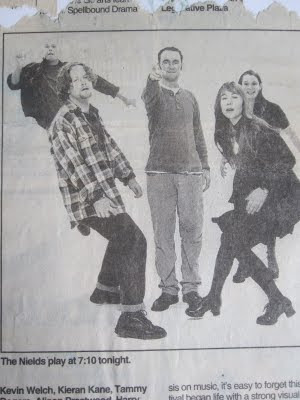
We were lauded across the board, by friends, fans, enemies, frenemies, industry and media as being the Next Big Thing: we had press everywhere we went; our CD was charting on Triple A radio (Adult Alternative Acoustic--or something like that); we had fans following us all over the country.
Meanwhile, we were living in our 15 passenger Doge Ram van and sleeping in Motel 6s where the towels were the size of placemats, and trying to stay somewhat healthy by eating salads with pretzels at Subways. If we were feeling flush, maybe we'd spring for TJIFridays. But then if the record company wanted us to do something, say a showcase for radio, we stayed at the very best Hyatt in town, with 20th floor views of the city and dinners at five star restaurants. Some gigs we sold out 800 seat theatres, and the next night we might be playing to forty people at a scungy rock club with female genitalia scrawled all over the dressing room walls. We were constantly in planning mode, like generals mulling over various battle plans. Our record company was like one general; our manager like another; Patty our friend, ally, booking agent-turned-road-manager-turned-manager had her own ideas, and so did we. So there were too many generals in the kitchen, to mix metaphors.


But the metaphor was pretty consistent, actually. "We totally killed!" we'd gloat after a great show, or after we outsold the other acts CD for CD at a Canadian festival. "You're going to make a killing," one indie record company president said to us and to his colleague, another president as he signed the papers, signing us over to that major label. That major label folded a year and a half later, taking with it--or so we thought--our entire back catalogue. A victim of the implosion of the music industry in the late 90s.

Tom let me talk as we drove to Williamstown, through Shelburne Falls and Savoy, up over Florida Mountain, past the hairpin turn. Katryna and I used to drive this road during those crazy touring years because our octagenarian aunt Sally still lived in Williamstown, and whenever we had a week off, we'd visit her. I tried to tell Tom the whole story, month by month. After a full day, I'd only brought him up to 1997. He is a patient sort; after all, he is a therapist and paid to listen to people's stories. It was fun to remember, and it was fun to listen to the mix of songs I'd put on my iPod--what is most likely going to be our set for the Iron Horse show on Saturday night.(I cannot divulge any song, because Katryna swore me to secrecy.)

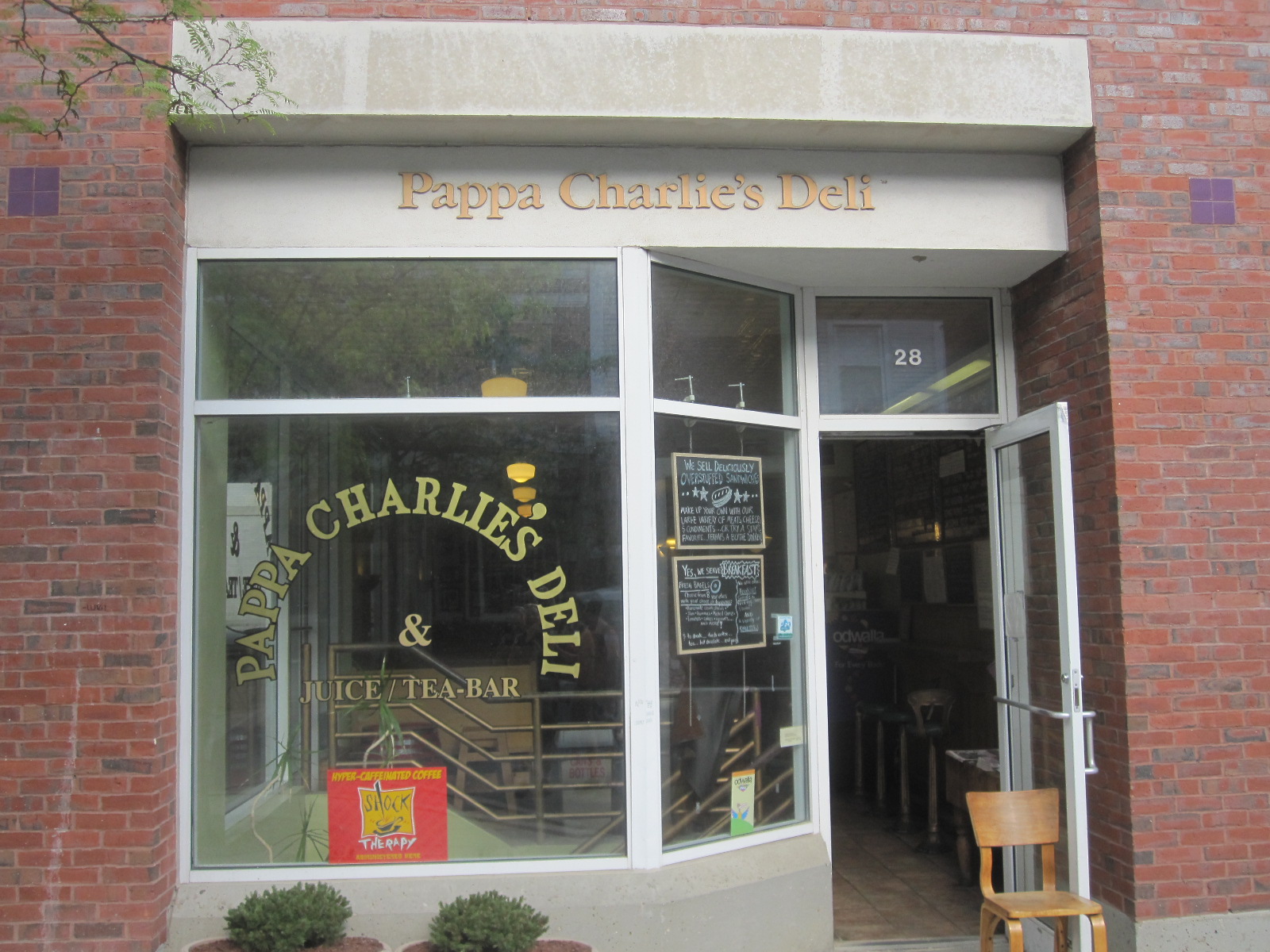
Tom and I checked into our hotel, walked into town and all around campus. I showed him the little deli where we said we would pay for free when we first came to town and were pounding the pavements. (That's the one where only Anthony Edwards and Mike Morrissey watched us.
Some other friends came, but they sat upstairs in the deli. When we asked why, they said, "Oh, we could hear you fine from here.")

I showed him 66 Hoxsey Street.
I showed him my grandfather's house

and also his grave, which is across the street from his house.
We remembered it was Memorial Day.

Monday morning we had read and wrote in our journals as we had tea at the Tunnel Coffee bar and watched the parade, which lasted about a minute and a half.
I wanted to hug the old men in the convertibles. I wanted to hug the girl scouts throwing candy to the onlookers. Then we went for a walk through some farmland, into the woods. I was talked out.

Later, after we'd picked up the kids (who didn't want to come with us--they'd had such a good time with their cousins--) I cleaned up, preparing dinner. I heard story after story on NPR about families who had lost a son or a husband in a war, and my musings paled in comparison, seemed narcissistic and pathetic. What must that be like, to send your child off, your partner off, to wonder every day, is he OK? Will she make it home? What is it that propels someone to serve one's country like that? Politics aside, it's a brave choice, for everyone involved. What propels any of us to do something that might allow us to stick out, to get struck down? I took a breath and said a "thank you" for another day, a great Memorial Day, a great reminder of why we do what we do, every day.

Saturday, May 28, 2011

Nields History #2, September 1995-the Trio Becomes a Band.


The Compliet History of the Nields
(as of September 1995--Introduction to the Nields first Songbook)

Katryna and David and Nerissa started this band slowly. The conception took place at the Madeira School, in Northern VA in the summer of 1987. Inspired in no small part because of a story the Washington Post had just done on the burgeoning open mic scene in the area, the three of them--under various terrible band names such as Odd Man Out-- worked up four tunes; one of Nerissa's ("Tripping the Light Fantastic"), one of David's ("Fade to Black") and two covers ("For What it's Worth," "Oh, Sister" by Bob Dylan). Odd Man Out lasted for two week, and the three of them went their separate ways, to different cities to pursue various degrees and to learn to do something useful. But all three of them kept making music individually. David grooved on guitar and wrote gross songs about vampires; Nerissa started an unwieldy folk group called Tangled Up in Blue and wrote a bunch of songs for her first album, Map of the World, recorded on a Walkman and released on a tiny label that duplicated its tapes via a home tape-to-tape player and sold them for free. That left Katryna, who went to Nepal and barreled through four years at Trinity College, where she hung out with Dave Chalfant (AKA Guitar Dave) who hung out with Dave Hower, both of whom played in many Real bands separately and together. But that's getting ahead of our story. The point is, in 1991, after several graduations and useful degrees of various sorts and a marriage between Nerissa and David, the three pals whose last name was Nields moved in together in a house in Williamstown, semi-demonically addressed 66 Hoxsey Street. They met really cool actors who are now famous (Gwyneth Paltrow, John Cullum, Anthony Edwards). They got their first paying gig at the terrifying Williams Inn (what they now think of fondly as their Hamburg). After that intoxicating experience, they moved to Connecticut where David had a job at the Loomis Chaffee School. Wishing to make a better demo, they hit the studio (Wellspring, now in Concord but at the time in West Newton MA) and made what became their first album , sympathetically entitled 66 Hoxsey Street.
They infiltrated the burgeoning folk scene in the zydeco-loving town of of Hartford, winning over the kind folks at WWUH and WHCN.
They lurked in Boston and at the Bottom Line in New York City, where they almost became famous several times. They drove a lot and covered most of Northampton, MA with posters and Nields fans.
They sang and grew and wrote many songs and thought, just like Christopher Columbus you don't know what you've found.
Their audiences sang along, adding their hollers to the Nields second album, Live at the Iron Horse Music Hall.


They bought cool clothes, hoping to intimidate.
They ate really spicy food. They went to LA and their guitars were stolen in a very special episode of Melrose Place.
They heard their songs on the radio and shouted for joy. They asked Katryna's friend Dave Chalfant to join them because he made them chuckle and actually keep the beat.
Now a quartet, they sang and grew and pondered the fact that many fans wrote letters wishing for a new album. Nerissa, Katryna and David asked Dave Chalfant for some advice. Make a record, he said. You make a record, they said. Yer mother, he said. They made a record and named it after Katryna's friend Bob on the Ceiling, who used to hang out in the Barracuda with Nerissa and Katryna back in the seventies.
They wheedled with yet another Dave--Hower--to play the drums on it. And in a blinding fury of light and thunder, the Nields Became!


Well, it sort of happened that way.

Monday, May 23, 2011

Nields History June, 1991


Monday's post is at Singing in the Kitchen and it is worth reading. Elle declared Saturday, "The best today of my whole life." You will know why if you read it.

It was a full weekend. The kids got to watch TV on Saturday morning because Tom and I had to clear out the kitchen, which is being renovated this summer. Already we have a pit dug to the east of the kitchen where the extension will go, and on Friday the good men came and cut a hole in our dining room window and put in a door so we can go out and in from the side porch. There is a John Deere backhoe in our yard. Jay is in heaven. "I wike dat man," he said pointing at our contractor who was operating the backhoe, making it lift shovelsful of dirt out of the ground and carefully dropping them in a pile. "He's a good guy."


At the top of this post is a picture of the house Katryna and David and I first lived in when we were trying to be a rock band. OK, folk trio. The address was 66 Hoxsey Street in Williamstown, MA, and we later named our first CD after this address. We moved up to Williamstown the day after our first paid gig (Trinity College reunions on June 7, 1991) because David got a job as an intern at the celebrated Williamstown Theatre festival. I established a tiny office with my 1986 Mac (remember those? the ones that looked like a small vertical box.)


I tried hard to get us gigs and was extremely frustrated by the fact that in order to get gigs you had to have played some. I cold-called Charlie Hunter who managed Sweet Honey and the Rock and some guy named Chris Smither, and he told me to make a press kit, which discouraged me, as we had no press. So I wrote a bio (I claimed we had a cult following; I didn't say the cult consisted of four friends of mine from college) and a list of songs we covered, including the Velvet Underground's "I'll Be Your Mirror" and "Stephanie Says," The Roches "Hammond Song," King Missile's "I Am a Sensitive Artist," Trapezoid's "Wagoner's Lad" and of course Sinaed O'Connor's "Black Boys on Mopeds." We lived off of ramen noodles and microwave popcorn for a few weeks. We got invited to a cocktail party by one of the actors, and a young actress named Isabel Rose said, "You really have to hustle in this business. I mean, you won't get anywhere if all you do is sit around knitting sweaters." I immediately stopped knitting.

Another actor at the festival, John Bennett Perry (father of future Friends star Matthew Perry) had a lovely voice, and at the cocktail party, we all took out our guitars and played Hank Williams songs. John is from Williamstown and he knew the guy in charge of getting entertainment for the Williams Inn. John told the guy who booked us that we would bring in the actors.

The Williams Inn paid us $400 a week to play for four hours Sunday and Monday nights in their bar. We thought we had made it big. We spent our first paycheck on a sound system which we purchased in Brattleboro VT at Maple Leaf Music. Slowly we grew a following; the actors from the theatre festival did indeed to see us on these days--their days off. We performed to a seventeen year old Gwenyth Paltrow, who hung out at our table between sets, saying things like, "My parents really want me to go to college, but I want to be a movie star!" We said, "Now, Gwynnie; you really should go to college." She said, "But I hajust got my first movie! I'm in Hook! All I say is," here she gasped, "'Petah!'" in a British accent. "But it's something."

We also hung out with Kate Burton, daughter of Richard and an amazing actor in her own right; John Benjamin Hickey, and the guy from the Heinz gravy commercials who was rich and used to buy everyone in the bar a round or two of drinks.

We also started playing the Williamstown Theatre Post Show Caberet, which was more fun that anything we'd ever done at that point. Later, playing workshop stages at festivals came close.


Saturday, May 21, 2011

For My Favorite 10-Year-Old


For Amelia—What I Wish Someone Had Told Me When I Turned 10

1. When a boy is mean to you, it doesn’t mean he likes you. It means he is mean. Don’t hang around with mean people.

2. Listen and observe the rules the adults make, but be sure to keep a part of you wondering why they made these rules. Allow yourself the space to figure out for yourself if the rules are good. If you think they aren’t, you might (now or later) suggest (politely, or impolitely) that the rule could and should be changed.

3. Think very very hard about getting a tattoo. They might be cool now, but in 2030 you might deeply regret it. And they might be totally out of fashion. (This was the case in 1980, when I was a teenager.)

4. Love your brother and your parents even when they are annoying.

5. Stretch! Try something you might be really bad at. You might surprise yourself. (And then go back to what you are good at.)

6. Read a lot, but observe the spirit of Rule #2: People who write books do not know everything.

7. Never ignore the smell of freshly mown grass

8. When you are sad, write down your thoughts and feelings in a journal where no one can find it. Better yet, keep writing great songs. (OH! Also, write some bad songs.)

9. Girls your age are going through a lot and might be really terribly afraid and therefore behave poorly or in ways that disappoint you. They also might be working really hard to not seem afraid, so you might not guess that that is what is going on. Don’t compare what they seem like on the outside with what you feel like on the inside.

10. Be yourself. Be yourself. Be yourself!!!!!! Keep being the best Amelia you can be!

11. One to grow on. Do not ever smoke a cigarette. You will thank me later.

Love, your aunt and godmother,

Nerissa

Friday, May 20, 2011

Countdown to Jam for the Fans, T- minus 21


This was during our This Town Is Wrong tour in 2004. We are playing with the CrackerJack Band at this place in the suburbs of Philly that reminded Katryna and me of the set of the TV show Friends. What was the name of this place? Amelia might have been in the dressing room with a babysitter. Katryna was just barely pregnant with William.

I have lugged my amp up from the basement (full disclosure: Tom did the lugging) and have taken the Les Paul out of its gorgeous pink case to show my children. They were suitably impressed; more by the pink than the guitar. I use "showing you the guitar" as a bribe to get Elle to finish her violin practice.

Wednesday, May 18, 2011

Ten Words of Advice to Graduates


What I wish I'd known when I was 22:
1. All the terrible things that happen to you (and terrible things will happen to you) will turn out to be great stories, grist for the mill, food for your growth, opportunities for you to become bigger-hearted and stronger and more resilient, IF you can see them that way and not as pure tragedy.
2. Don't forget how to play.
3. Establish a spiritual practice, even if it as simple as taking time to connect with the natural world every day.
4. Drink 8 glasses of water per day
5. Move your body, be fully in your body, and don't think of your body as something you have. If you are "taking care of" your body, you're not really living in it. You're missing the point.
6. The more you give generously of yourself, your time, your resources, the more you get.
7. Everything you ingest becomes a part of you--so choose wisely, be it food, entertainment, friends, experiences.
8. Sleep a lot.
9. Compromise with your lovers and friends
10.Master the art of forgiveness.

Countdown to Jam for the Fans Day 2


So I finished the song for the finale, except now it's not for the finale. If we can arrange it in time, it will be somewhere else in the set. Katryna and Patty and I just met for lunch, looked at lots of old pictures, massaged the set list, planned the dinner menu for the folks who bought the entire weekend package. I think we are supposed to call them "package holders." So many people have requested songs on Facebook! I wish we could learn them all. I mean relearn them all.

As part of this blog-every-day project, I will also post an old photo a day. Here is today's: It's of me and Christine Lavin plotting to set Patty (our manager) up with Julie Gold. Don't we look like evil yentas? Sorry about the quality. (As far as I can tell, we weren't successful.)

Tuesday, May 17, 2011

Countdown to Jam for the Fans #1

I am supposed to be writing a song for the Nields 20th anniversary/reunion finale at the Iron Horse. No pressure. It's just supposed to sum up the last 20 years, be upbeat, have a great chorus that the fans can sing along to, and top everything else that we play. I started to write it Monday. Or rather, I started to write something; but what I wrote, while good, is not an end-of-the-show kind of song. It's the kind of song that, in the days of the band when we all lived together and breathed in unison, we would have placed about fourth or fifth in the set. It grooves. It would have gotten everyone on their feet. But it never would have ended a show.

Men came today in a big red dump truck and hacked away at our back porch until it was gone. I thought this would be terribly depressing; after all, I loved that back porch. I wrote chunks of my books sitting on an Adirondack chair on that porch, and I (and others) sat on the floor, guitar in lap, and wrote songs. In fact, the song I mention above was started there. I kept spacing out as I was writing it, gazing at the beautiful flowery backyard, moping about the fact that I would never sit here again, never gaze at that view again. Then I remembered the whole point of the renovation is to create a ROOM in that very spot so that I can sit and gaze and write songs--from my new kitchen.

Two great surprises came from the porch demolition. The best one was that the men located Jay's small Hess motorcycle guy (actually William's--Jay stole it.) Motorcycle guy has been AWOL for over a year. He had been buried under the porch. Jay is apoplectic.

The other is the light. The light! Our kitchen is light! The porch had been blocking the light! Now I have a tangible, experienced vision to meditate upon when I lose heart for this project, as I will sometime in June when I wish for more than a trickle of water to wash my greens, or when one of my kids reminds me why it's a really good thing to have a bathroom on the first floor (the bathroom is being gutted, too.)


Katryna said I could re-write an existing song for the finale. I actually had just done that.

For five generations now, our family has spent parts of our summers at a place in the high peaks region of the Adirondacks called Putnam Camp. This rustic place, nestled at the foot of Giant Mountain, hosted Sigmund Freud and Carl Jung along with William James while the two psychoanalysts made their first and only trip together to the United States. Cabins have names if not running water, and after each family style meal, guests climb the base of the mountain to have tea and dessert in a wall-less cabin affectionately known as The Stoop. This is also where folks pull out guitars, banjos, the occasional hand-made upright bass, and sing songs passed down from family to family for generations.

Putnam Camp has some traditions which require music, too; notoriously a song guests sing to latecomers to dinner called "Little Popsie Wopsie." (Our mother lived in fear of being "Popsie wopsied," and thus we girls were never once late.) But our favorite song is the one guests sing to the departing visitors. At the end of a stay (typically a week), remaining guests line up and hold hands and do a kind of modified can-can while singing this song to the car loaded with the departing guests as it drives down the mountain out to Route 73.

We’ll dance like a fairy
and sing like a bird
Sing like a bird, sing like a bird
We’ll dance like a fairy
and sing like a bird
And wile the hours away

In our family, we have taken this tradition and applied it at every possible opportunity to bid farewell to any guest at all. My kids would sing it to the postwoman if they could. My parents often sing it to us as we drive away from their house, the two of them holding hands and kicking their feet gamely back and forth, waving with their outside arms as our car follows the bend in the driveway.

Last Sunday, our friend Kris departed after spending a lovely day with us. "Dance wike a faiwy!" Jay shouted as she closed her car door, and so Elle and Jay and I sang and danced and waved as Kris made her way back home. As we turned to go back in the house, it occurred to me that the song needed some new verses. Probably this occurred to me because my son wouldn't let me stop singing the one existing verse, and I was getting bored. Boredom is the doorway to creativity, says our friend Holly Near.

We’ll dance like a fairy and sing like a bird
Sing like a bird, sing like a bird
We’ll dance like a fairy and sing like a bird
And wile the hours away

We hope that your travels bring you safely home
You safely home, you safely home
We hope that your travels bring you safely home
And show you some fun on the way

We’ll hold these good times we had close to our hearts
Close to our hearts, close to our hearts
We’ll hold these good times we had close to our hearts
Until we’re together to stay.

We’ll wile all our hours away while you’re gone
Away wile you’re gone, away while you’re gone
We’ll while all our hours away while you’re gone
And then we will go out and play.

Don't you think this would make an excellent finale to Jam for the Fans?

Monday, May 02, 2011

Your House Is Strong-Happy Mother's Day!

Here is the video we made in conjunction with MotherWoman. The shot of the woman holding the sign "..and wise" gets me every single time I watch it. And those kids...

Wednesday, April 27, 2011

More Easter Thoughts


The Master gives himself up
to whatever the moment brings.
He knows that he is going to die,
and her has nothing left to hold on to:
no illusions in his mind,
no resistances in his body.
He doesn't think about his actions;
they flow from the core of his being.
He holds nothing back from life;
therefore he is ready for death,
as a man is ready for sleep
after a good day's work.
-Tao Te Ching, verse 50

After I wrote this piece, it actually was Easter. I read Katryna my last post ("Follower of Jesus") and she quipped, "Maybe it's because I haven't slept in a few days, but I could hardly stay awake listening that."

Following through on my promise last year that Easter should be more about spring and bunnies and eggs and sugar and less about my existential angst, I joined forces with Katryna to create Easter baskets for the kids and spent the wee hours on Sunday planting Reese's peanut butter eggs and Jelly Bellies all over my mother's living room.


We hid the colored hard boiled eggs outside and marveled at the cuteness and generosity of our four kids, three of them making sure that the youngest got his fair share.

We then proceeded to church where the kids made God bells (don't ask) and we listened to such divine music (complete with tuba, trombone, marimba and gigantic organ) and a beautiful sermon by the wonderful, wise Aaron Fulp -Eickstaedt which reminded me that, no matter what one might ultimately believe, one strong message of Easter is that the story isn't over. It ain't what it seems to be.

Later that evening the grown ups sat around the dinner table talking about the Steven Mitchell book Tom and I had read. I was full of the day--letting go of all my wonderings about The Truth and Life and Death and Resurrection. And yet I found myself, as we talked about the ideas in the book, feeling disconnected again, lost in my head. It hurts in a way to be stuck in your head, thinking about ideas. In a way it's a kind of anesthetic. You forget you have a body when you are lost in ideas. But eventually your body reminds you, and you feel pinched and cramped and slightly sick to your stomach; at least I do.

We got to the part about Jesus parentage. I was putting forth Mitchell's idea that Jesus was shaped significantly by his illegitimacy, and explaining that historically being called "Son of Mary" (or of any woman as opposed to "Son of Jack" or "Son of Matthew" or Son of Any Man") was a slur. (Mark 6:3)

Elle raised her hand patiently until someone called on her. "Excuse me," she said, acting not at all as though she had consumed her weight in chocolate that day. "Was Jesus's mother Mother Earth?"


And we all said, together, Yes, she was.

Thursday, April 21, 2011

Follower of Jesus


I didn't use to love Easter. Maybe it was the reoccurring failure to successfully give up anything for the whole of Lent, maybe it was the disappointment so often of the New England springtime weather, but more likely it was confusion I felt about the story of Jesus rising from the dead. Did he really? And even if he did, what did that mean for me and all my mortal friends? I could never accept the equation given to me in a shouting match my freshman year in college when I was collared by a member of Campus Crusade for Christ who with great frustration tried to get me to believe that Jesus was a kind of blood sacrifice in atonement for Adam's original sin. That God was somehow powerless to keep us from burning in hell, and that therefore He had to let His son die a miserable death in order to retract us all from the pawn shop. It seemed bizarre and completely unbelievable to me. And what about all those good people who believed in and loved God or Spirit or Allah or the Tao or Kindness and Goodness with all their hearts and souls and minds and strength? Or even the mean people who had bad lives and so were bad to others? They were doomed to hell because of some equation? No way.

And yet I have always loved Jesus. I felt his love as a little child, seeing myself in the scripture where he tells his disciples that one must enter the Kingdom of God as a little child, and then takes the children into his arms to bless them. I always loved the poetry of the Sermon on the Mount, the poetry in the story of the blind man whose sight Jesus restores (“I see men walking like trees!” he exclaims when he first gets his sight back.) I love the moment when Jesus pauses to stoop and write on the ground in the dust when asked if it is right to stone a woman for adultery. And most importantly, when I am most troubled, most challenged, the version of God I need always turns out to be Jesus.

This year, starting in early March, Tom and I joined a book group. The book group was led by our minister at the West Cummington Church, Steve Philbrick. Together we read The Gospel According to Jesus by Stephen Mitchell. This book takes as its premise that while there is much to love in the gospels, there is also much not to love, and much to be taken with several shakers worth of salt. It's Mitchell's version of what (with a nod to Thomas Jefferson, Leo Tolstoy and a group of scholars known as the Jesus Seminar) he believes to be the authentic sayings of Jesus minus what centuries of games of telephone, Roman Emperors, church councils and warring factions plugged into what we now read as Matthew, Mark, Luke and John, littering them with polemic and attempts to prove Jesus's paternity and divinity (which, by the way, are already at odds with each other--how can Jesus be descended from the House of David via his earthly non-father Joseph AND be the son of God?) Indeed, in my own lifetime of reading the gospels I have always been troubled and confused by what appeared to be two Jesuses: the Jesus who says, "Why do you call me good? There is no one good except God," (Mark 10:18) and "No one gets to the Father but through me," (John 14:6).

Mitchell's book produces a streamlined Jesus, one who feels like a real person, more coherent, an enlightened human, completely lovable and charismatic, with a journey that makes sense to this reader. Born into bastardy at a time in history when this was akin to being a leper, he undoubtedly suffered unspeakable social torments as he grew into adulthood, watching his mother produce other brothers who were not afflicted similarly. He certainly must have wondered with frustration who his father was. Jesus's epiphany--his moment of awakening--comes at his baptism, where he hears the voice of his true Father, and realizes he is God's child in whom God is well-pleased. But, Mitchell argues, Jesus doesn't necessarily believe that this makes him any different from you or me. We too are children of God; we just have to realize it.

"But I tell you, love your enemies, do good to those that hate you, bless those who curse you, and pray for those who mistreat you, so that you may be sons of your father in in heaven; for he makes his sun rise on the wicked and on the good, and sends his rain to the righteous and unrighteous. (Matthew 5:44)

As Jesus came to forgive his childhood tormentor, he demonstrates that we all have this capacity to forgive within our hearts. His forgiveness of that which is most challenging can be a more slow-going process. A reading of the text supports the argument that it takes Jesus until the end of this gospel to come to a forgiveness of his mother (in the story of the woman about to be stoned for adultery.) Remember that when Mary and his brothers bang on the door for an audience, Jesus says, "Who are my mother and my brothers?" and points to the crowd in the room listening to him. "These are my mother and my brothers" (Matthew 12:48-49)

Forgiveness is Jesus's great new teaching, the piece that Christianity brings to the world with more clarity than any other religion. God's forgiveness of us when we come to Him as supplicants is old hat at the time of Jesus. All religions posit a God who yearns for our repentance and delights in forgiving us. What is new to me in this translation is the concept that we must forgive each other and ourselves. Maybe this kind of forgiveness is uniquely Jesus's to teach precisely because Jesus had within himself so much anger and resentment. This possibility makes me like him even more than I did before. I am much more willing to follow someone who has actually struggled with what I struggle with and has overcome it. (Mitchell reads the story of the woman being stoned for adultery as a moment of insight into Jesus’s own anger with his mother--when he writes in the dust, perhaps he is rewriting his own "story", realizing as he does so his own teaching, that as we judge, so are we judged. He forgives the adulterous woman and in doing so makes peace with his own biography.)

Jesus preaches over and over that the Kingdom of God is at hand--here, now, in all that is around us, good, bad, boring, distracting. The tsunamis, the cancer, the babies born, the lilies of the field, the billboards, the filibustering on CNN, the miracle of life. When we align ourselves with the flow of it all, we lose track of time: this is the eternal life we gain. When we let go of our self-pity, selfishness, obsession with our status, wealth, waistlines; when we act out of love for our brothers and sisters, for our enemies and for the strangers we encounter on the road; when we see that we are all connected and that any small act we do for anyone else we do for Jesus (and for ourselves), we are reborn. We are made new. We are in heaven.


Mitchell does away with some of the most familiar parts of the Jesus story: the Christmas scene, Bethlehem, The Last Supper, and most importantly, the physical resurrection. This last is the part I flinched at. My own childhood fear of death, fear of annihilation, hope for an afterlife where I would be reunited with everyone I loved and where we would all live in peace and harmony with no billboards and filibustering, and where somehow we were not bored by the monotony of perfection, still remains. I don't want to not exist. I don't want to be nothing. I passionately want to BE! Death terrifies me. I want a heaven. I want a resurrection. I want to live forever with Tom, Jay and Elle, not to mention Katryna and Abigail and my parents, and all the writers and friends I love. I want to see my grandparents and Mimi again. Call me spiritually immature, but that is my truth. I have been tortured with fear ever since reading this book; real existential fear. What if this really is it, if it really does come down to this moment and nothing else? Then I am truly screwed every time I space out, check my Facebook status, worry about food and money and clothes, leave the Kingdom for my myriad of plans for tomorrow. I am wasting my one and only life.

I hate this thought so much.

So I have been praying. God, please show me what You really mean by resurrection. Show me what you mean by Heaven. Give me a new idea, one that I can embrace and pursue with all my heart, all my soul, all my mind, all my strength.

I called a friend of mine, a lifelong Catholic and told her about my doubts. She surprised me by concurring with my questions about the veracity of the resurrection of the body of Christ. She said she had prayed during a retreat for answers to this, and experienced Jesus saying to her, "Here are my wounds. Take them. It doesn't matter whether I rose or not. What matters is that you have risen." Steve had said a similar thing when our group ended last week. “What matters is not whether Jesus rose,” he said, pointing at each of us. “But that you do. That Karen does. That Betsy does. That Tom does.”

Later, as I was pondering these thoughts on my run, I thought about the pain of Ego, the pain of wondering if my shows would sell out, if my work would be received well or poorly, the pain of judgment about my physical appearance, the pain of comparing myself to others. I thought about the pain of wishing I had what I don’t—everything from a gas/electric Wolf range to private school for my kids to free health care for all, to having everyone around me acknowledge at all times that I am right about everything. And suddenly, I got it. When I am thinking about these things I am not here. I am in my head, not my body. I am not in the present moment. And even when I am thinking about others and not my tiny limited self, I am still not present. I am not dwelling in Jesus’s Kingdom of God.

As I practice mindfulness, as I love my sisters and brothers and elders and children, as I act as a good steward of the Earth, as I do my Yoga (writing songs, tending the garden, teaching my workshops, coaching my clients), as I try to follow the teachings of Jesus, I move incrementally into a state of less self-centeredness, less ego. And perhaps someday I will lose my passion for having things go the way I think they need to go. If I do my work well, and am blessed with a very long life (for it will take this gal a very long time to practice thus!) then maybe I have a shot of rendering my mind fit for an afterlife of stillness, of unity, of oneness.

On Good Friday, Tom and Elle and Jay and I went to the airport to fly to Virginia for our show at Jammin Java's in Vienna Saturday night, and Easter with the grandparents Sunday morning. As we moved along in the terminal after our security check (we always mark each passing of security with a hearty family high five), I rose out of my habitual whirl of worrying, mom-planning, spinning in my small self, and gazed up to see Tom, Elle and Jay running and jumping and dancing as they made their way to the gate. At that moment, I didn’t need any help to be present, gleeful, with my chest blooming with love and joy. Perhaps this is my Easter moment, and perhaps it is enough.

Monday, April 18, 2011

The Rites of Spring


photo by Jim Henry


About this time of year, I find it necessary to listen to Stravinsky's Rites of Spring, the 1913 ballet that caused riots at its debut in Paris. The piece depicts Pagan Russian fertility rites and supposedly features a girl who dances herself to death. I first heard the piece when I was a freshman in high school, where I promptly fell in love with all things early twentieth century, and choreographed my own version in my bedroom later that week. Each year, right around post-tax day, in the pre-tulip, pre-lilac, when it's still red-bud April I need to hear it.

I am not alone in yearning for a reflection of the season. Last night Katryna and I played a show at Shelburne Falls' Memorial Hall. In the green room on the second floor of that lovely old building, we looked out over the Falls and could barely carry on a conversation for the noise of all that golden snow melt cascading down, crashing over and churning it all up.

We played with a band called Flapjack Overkill, a stupendous student band directed by our own Dave Chalfant and fronted by three seventeen year old singers, who each possessed a lovely, unusual, gorgeous voice capable of sending the audience into riots of joy. The band was not what the promotor expected at a nice little folk show with Tracy Grammer & Jim Henry and the Nields. Instead, it was a 13 piece ensemble complete with horn section, keyboards and killer rhythm section who rocked the house. They joined us on "Easy People" and will remain one of my all time great musical memories. Something about the pure power of all that youth behind us made me feel as though I could handle anything this spring, even revolution.

By now it's a cliche to talk about all the other kind of adolescent disruption that seems to take place so often around Hitler's birthday which is April 20. April 19 was the day the 51 day Waco siege ended in fire, and a year later, the day of the Oklahoma City bombing. April 20 was Columbine. April 21 was last year's BP oil spill. Ugh. There seems to be something in the early spring when the sun is about to leave the first sign in the zodiac--the adolescent Aries, a ram kicking its heels into the air and butting anything before it with its blunted horns--and enter the more congenial territory of Taurus.
But before we enter the sweeter part of spring, I want to try to walk the razor thin line that runs between the intoxicating chaos of life coming back to life with the promise of all that energy I saw in the Falls and hear in the Rites and Slapjack Overkill, and the places where it threatens to spill over and engulf us all in the violence that I believe can only come from the same God that I worship as the gentle parent I know in my most quiet and centered moments. God is that big. God is that mysterious. God is that unfathomable.

Notice, PS, that there two other pretty large cultural/religious events that happen at this time of year: Passover and Easter. (Actualy, I am quite sure there are parallels in each of the major faith traditions the world over,and I invite readers to educate me about this.) In each case, life and resurrection, in the form of new patterns, new traditions, emerge out of shocking violence. Passover's seed story is of "God" asking the Hebrew slaves to mark their doors with the blood of a lamb so that "God" can spare them the last of the ten plagues: the killing of all first born sons in the land of Egypt where they are enslaved. Easter is the story of Jesus being brutally murdered by crucifixion. And yet in each case, these events gave birth to the fundamentals of each religion. The Hebrews were able to leave Egypt in the wake of the "passing over" of the massacre of the first born, and eventually come to the land of Canaan. More importantly, Passover is seen as the beginning of Yahweh's covenant and protection of the Jewish people. Christianity of course springs from the aftermath of the death of Jesus; his martyrdom inspires countless followers to go to any and all lengths to promote their faith.

Tom and I have a friend who is dying of cancer. We got a message last night that he has weeks to live. The doctors have taken him off chemo. His thirteen year old daughter has been told. This daughter, by the way, was adopted from China by our friend and his partner. When the daughter was five, our friend's partner died of cancer. How can it be OK that a kid lose not one not two not three but four parents before she hits puberty?

Steve Philbrick, upon hearing this said a couple of things. One was, "That kid sure must need to be here, if they're shooting out all the parents under her feet." He also said, "It ain't much of a God if you can easily discern His will."

Oh, right. What kind of a God would it be if it all made sense to me? If it were all predictable? If we all knew for sure that when they rolled aside that rock almost 2000 years ago and saw no body, if a risen Jesus had appeared on CNN and granted some interviews, there would be no need for faith, or for a leap. Faith without a leap is just more of the information gathering we do anyway. Then faith is just the ability to Google.

I played the Rites of Spring for my kids the other day. I crouched down on the middle of the carpet where the pattern makes a circular design and the three of us pretended to be small plants just below the crust of the earth. When the music got loud, we jumped up and danced around. But then I made the mistake of pointing out that the drums and bassoon might be a bear. Jay jumped in my lap at that point. Elle stated, "I am not scared like Jay," but then she too jumped in my lap. I abandoned our ballet to make tomato soup for their lunch and turned off the music, which I had decided was really about the same as playing them Marilyn Manson at their ages. Jay followed me into the kitchen. "Where is da beaw?" he asked. He wanted to see a picture of the CD cover. I picked him up and cuddled him and talked about how you can make up all sorts of things in some kinds of music and make pictures of them in your mind. He has been talking about the "beaw music" ever since.

Lots of good happens between April 19 and 21 too. Some of my favorite people are celebrating birthdays. Life is expensive, this period seems to remind us. In all the things we want, the things we fear, the things we push away, the places we grieve and mourn, we can forget that we have been given this most precious gift of all: awareness and a heart that beats. We don't know for how long we get to have this gift. But spring gives us great hope that even when we are gone, the gift remains.

Monday, April 11, 2011

You Are All Beautiful


I took the photo at the top of this post a couple of days ago, just walking down the street. I almost didn't stop, but the colors in the yarn caught my eye. Upon closer inspection, I saw that the artist had not only cozied up the meter pole; she had also stitched us a message: "You Are All Beautiful."

Monday was the first day where we could take off our shoes and let our tender pale feet begin to develop their summer calluses. It was the first day where the bugs were more than a curiosity to my kids; the first day we had lunch and dinner outside. I took the kids over to a friend's house and the two of us moms watched our older ones swing on her swing set while we cuddled and breast fed our little ones. She was telling me about a friend of hers who was expressing some distress about the fact that she was choosing to pursue her career full throttle at the expense of spending time with her kids. It seems like there's always some new variation on this one. In her friend's case, the mother was wistful about all that she was missing in order to not compromise her very successful career. My friend said, "The hard part is, in the beginning you are feeling bad for your child. All the mommy your baby doesn't get. But later, you feel bad for you--all the child and child-time you don't get."

I've taken on a practice this Lenten season. A Catholic friend of mine told me she'd given up negative thinking. How hard could that be? I thought. Way easier than giving up caffeine. I always like to take something on rather than give something up. And so I adopted the practice as well, and found almost immediately that just as with meditation I cannot do it anywhere close to perfectly, or even 25% of the time. But, again like meditation, the practice is actually in the noticing that you are not present, not positive, and then gently steering your mind back to a friendlier turf. You do this over and over and over, as Jack Kornfield says, the way you train a puppy to pee on the newspaper instead of on your rug. And while I haven't had a single day that was truly free from negative thinking, let alone complaining––which is the audible version of negative thinking–– I have to say I have never been happier in my life. I don't feel as compelled to make everyone do what I want them to do. I seen to be happy just observing and participating when called upon. People delight me. Everything seems fresh and amazing. Best of all, I have stopped beating myself up. I don't waste my time being annoyed with myself for failing so miserably at the task of thinking positively. I just go, "Oh, well. I am learning. Nice trying!"

The difference might also be that because I have to drop the thought, I don't get to fondle it, nurture it, explore all the intricate nuances of how right I am and how wronged I have been, how things really would have been so much better if they'd gone the way I'd wanted them to go, how rotten it is that the beautiful 77 degree day we had yesterday has morphed into 45 and drizzly today.

So when I start to feel my jaw tighten and my eyes get hard like a lion about to pounce, or when I feel that queasy feeling in my gut, I get reminded that this is not good for me. I think about something joyful--usually my kids or Tom or my writers making great literature and telling some crucial bit of truth, or that one detail about my kitchen that is going to completely change my life forever for the better (the filtered hot/cold spigot on my new sink!)-- and my mouth turns up, my forehead uncrinkles, my heart feels peaceful and the cycle is broken. It's as if I have a screened-in porch, where before I was at the mercy of the mosquitoes and yellow jackets. I still see them, but now they can't get at me.

Last Friday I got an email from Elle's pre-school. Her graduation is now scheduled for June 10 from 6-7:30pm. Also scheduled at that time is the Jam for the Fans dinner and Meet and Greet, and the open mic which we'd hoped my father would participate in. When I read the email I immediately spun into panic mode. I called Katryna, and she very calmly told me to just call the school and nicely ask if they can change the date.

"Why not?" she said. "The only thing you have to lose is their opinion of you."
So, with great dread (for I care deeply that people hold me in good opinion, but I care more about seeing my daughter's graduation) I did just that. I even tried to bribe them, telling them I would lead the graduates in some stirring folk song appropriate for the occasion, something like Aikendrum.


They did not change the date.

I indulged in some negative thinking. This stinks! I thought. Not only am I missing my beloved daughter's moment of glory, but I am also missing all her classmates, most of whose music teacher I have been for the past two years. It would have been so fun to get the kids to perform! And all those wonderful parents, friends I have made, shoulders I have cried on while we watched our kids go from diapers and temper tantrums to confident organized almost-kindergartners. This was one of those moments my friend was talking about. Elle might be fine without me, but I wasn't sure I was going to be fine missing this event.

And then I decided to see what might be good about this new schedule, or at least about this state of affairs.
1. Elle's grandparents will be in town for Jam for the Fans. Maybe they can shoot over and see a portion of the event.
2. Maybe Elle is meant to be mad at me. Maybe it's good that her dad is the good guy and they can have some special time together.
3. Maybe we can have a special Mommy/Elle celebration some other time. Ditto the kids and their song.
4. Maybe the Fans will tell me to come late to the Open Mic and see my daughter graduate.

Funny that Katryna had to think of this last one. It never occurred to me that I could ask my fans (who, after all, are my employers) if they could spare me for an hour.

Jesus said, famously, "Judge not that you be not judged." He didn't say this in a wagging-a-finger, Law-of-Congress-kind-of way. He said it as the Law-of-Physics-kind-of fact that it is. When we judge, we enter a state of judgment and judgmental-ism. The opinions start ricocheting off any available surface; they are like little arrows stabbing us constantly. Judgments create pain. The Buddha, a tad less famously said, "Opinions just go around bothering people." I am so lucky to have work I adore, work that feels more like a calling than a way to make a paycheck. Some moms when they give up their paycheck gig feel very clear and good about their decision. Some moms are able to keep doing the work they love while missing very few beats in the saga of their kids' lives. I wanted to be so comfortably famous and successful by the time I had kids that I'd be able to chuck them in the back of the tour bus with a full time excellent nanny who would also be one of my best friends and a traveling Kodaly or Dalcroze teacher who also loved to play soccer, and maybe my bandmates would have kids my kids age and we could all go around the country together, one gigantic preschool on the road. Katryna and I would be selling out shed dates and big theatres and then spending the mornings in the lobbies of the hotel, chasing our kids up and down the elegant carpets past flower arrangements the size of my Suburu. My kids would see the country, pooling into Yosemite and Yellowstone and the Grand Canyon whenever we toured these areas. I would have it all.

And that didn't happen. And what I have today is so much better, so much richer, primarily because it is real and not a projection of what if. The projection misses the mosquitoes and the yellow jackets--rarely do such commonplace villains get written into fantasy. But why begrudge the mother who has this? And why pity the mother who doesn't? How could I have predicted that the best moment of my recent life was getting to watch my daughter play a variation of "Twinkle Twinkle Little Star" onstage with a bunch of other kids on a Sunday afternoon while my son ran around on the grass outside. The best parts are always your real life. The best parts are when you stop, wherever you are--be it in the middle of your detested job, the middle of your never-ending afternoon, the middle of your peak moment onstage or in the operating room, the middle of your walk down Crafts Avenue--and let the voice tell you the truth. You are beautiful.

Monday, March 21, 2011

Waiting for Spring, and Thoughts on Little House on the Prairie


The other day I got a most alarming message from my gmail account. In a glaring red box at the top of my gmail page, I was informed that I had reached capacity and if I didn't delete my excessive emails, they would be deleted for me. I felt panic, but also astonishment. I had used up all my space? How did that happen? I'd always envisioned my available space as outer space, my emails over the course of the past 5 years like tiny specks, the size the stars appear to be--dots on a black canvas--rather than what they really are--giant suns. I had loved gmail when I first signed up for it, right around the time Elle was born. In fact, I went into labor three and a half weeks early in the morning after I'd spent the evening before wrestling for three miserable hours trying to get my old AOL contacts to import into gmail. Coincidence? I think not.

Gmail was so fabulous--it searched and found everything I'd ever written to anyone and everything anyone had ever written to me. I was saved! No need for filing, no need to try to figure out what to keep and what to trash. I could just keep it all! Or so I thought. Discovering there were limits to my cache, I was mortified. Being called on my hoarding tendencies in this arena was just as embarrassing as being called on the hoarding of clothes, tchotchkes, pots and pans, mugs, guitars, books, ancient issues of Yoga Journal, and all those scraps of paper with lines of songs on them. Not only that, for the first time I really got that my storage of useless emails of Facebook announcements, the New York Times, freecycle posts and the like were being subsidized by coal drawn from mountains in Tennessee with their pinnacles snapped off, and nuclear energy from the kinds of plants that are causing radiation sickness in Japan right now. I am the problem, and by deleting my copious emails, I can do my part to be on the side of the solution.


Elle has recently discovered the Little House books. We finished reading Little House on the Prairie last week, Tom and I fighting over who got to read aloud to the older child. These were among my favorite books when I was a child--I joyfully read and re-read and re-read them until I had memorized the songs Pa played on his fiddle, the exact items the girls got for each Christmas, the reverence with which Laura created her dowry, the color and texture of her wedding dress (black, silk). I noticed that the Ingalls girls sang "Bean Porridge Hot" while I had learned the same song as "Pease Porridge Hot." The folk tradition lives. Elle noted that she might play "Old Dan Tucker" on her violin someday, just as Pa did.

But what struck me going back to these books as an adult was the existential discrepancy between the ways in which Americans in the 1870s viewed the land, the country, its potential, and the way we do now, in 2011. It must have seemed to those pioneers that land was all we had. Land and time; when Ma moans to Pa in the last chapter that they have lost a year of their lives in building their little house, toiling the earth, establishing a claim, only to be kicked out for slightly vague reasons by government soldiers, Pa shrugs and says, "We have all the time in the world, Caroline."

For as far as Laura, the eight-year-old protagonist, could see there was nothing but the Kansas prairie grass and wild game. "We can eat like kings here," Pa declares, arriving back to the Little House with two jack rabbits in one hand and a prairie chicken in the other. And he notes that it is no longer so back in the Big Woods of Wisconsin where the settlers have already depleted the resources.

But like my blissful ignorance about my gmail account, which I'd assumed would hold every single email I ever wrote for all eternity, we Americans--actually we citizens of the planet earth--have now clearly come to the edge of our space. Hearing from a friend at a gathering a few weeks ago about her view of the Atlantic while living in the Congo--all she could see as far as the eye were oil riggers drilling off the coast--drove home this point. The world has changed radically in 40 years since I've been alive. And of course the world I read about in the 1870s was almost unrecognizable to the one I inhabited in the 1970s, when the Congo was still wooded and plain.

Sunday was the first day of spring, and Tom uncovered his garlic plants while the kids played in the warming sun. Monday it snowed. I carried my mug of green tea (yes, back on caffeine as of today--the snow did me in) to the couch in the music room and gazed out the window at the falling snow. When I let go of the story--it should not snow! It's spring!--I rather enjoyed the silent gentle falling, slowing covering the barn roof with white. I thought about the way I used to binge: spacing out while consuming a half a box of granola, completely dissociated from my body. In that state, I had been suspended in time, floating in space, just me and my mouth. I haven't done that in years, and I hope never to eat that way again, but it occurred to me today that something might have been lost in abstaining from this behavior. Just as an ex-smoker misses that opportunity to step outside the building for some fresh air, a pause and a moment to reflect, I missed that spaced-out feeling I used to get when I did the outrageous (in my mind) activity of eating copiously between meals. And when I stopped drinking caffeinated beverages, I stopped taking the proverbial coffee break. I know, I know, I could have taken small meditative breaks without the coffee, taken herbal tea breaks. But without the physical need to ingest the chemical, tea frankly lost its appeal. Why drink something that might spill and stain? I wasn't thirsty.

But today I was. I got it into my head that I wanted more than anything to build a small room at the top of my house, with glass all around, and to spend an entire year just sitting there and looking out the window. Just watching the trees change, the birds come and go, the sky turn blue, white, grey, black, purple, orange, pink. I wanted to watch spring come, crocus by crocus, bud by bud, leaf by leaf. I wanted more time and space. I wanted to just watch.

Laura and her sister Mary spend a lot of time just watching. Many chapters in Little House mention this. Laura and Mary sit at the window for three days watching the horizon to see when Pa is coming home from Independence with their ration of sugar, cornmeal and coffee (notice that these pioneers did not do without coffee, though they did without vegetables for an entire year. As far as I could tell, the only fruit they ate was wild blackberries.) Were they more or less bored than a typical child of the 2010s? What would they have made of our swarms of emails? Ma comments to the girls at one point that if they send a letter to their family back in Wisconsin in the fall, they might expect a letter the following spring. It would be less disrespectful to the planet to save one's correspondence if letters came just once a season or less. My emails to my family are copious, though short and usually not precious, though occasionally full of priceless moments: "Jay announced that from now on we should call him Sosuke," I recently wrote (Sosuke being the little boy in Ponyo). I would like to be able to look back and remember this.

I like to think that I am enlightened enough not to berate myself for my email disorganization, to sigh and accept that this is the way it is and let gmail delete all my past correspondence for me. If in a life we leave behind only traces of our past, the way ancestors of Laura Ingalls (of which there are none, actually--none of the four sisters had grandchildren) might have discovered that one letter of 1875, I needn't fret about a dearth of evidence. Even without a single email, I have left plenty. Even if the house burned down (God forbid) and I lose the papers that contain my writing, it will be all right. Songs get lodged in the ears and hearts of listeners and get passed down generation after generation. I think I'd best spend my time writing songs, sitting in a glass-enclosed room, watching the seasons changing rather than deleting emails. Though then again, there was an awful lot of busywork a person had to do back in the 1870s--it probably took fifteen or sixteen trips to the well to haul up enough water for a bathtub, never mind the time it took to heat it up. So I will do the 21 century equivalent of chopping wood and carrying water. I will go through my in-box, say goodbye to what I might let go of. And then I will write a song.

Tuesday, March 15, 2011

Shiva, Shakti, Seeger, Suzuki


Today in yoga class, our teacher Amy Reed, talked about the dance between Shiva (our bare, pure awareness) and Shakti (the ways in which we harness our awareness to engage with the world.) The two are always at play with one another, going back and forth. Some times we are more introverted--more Shiva--observing the world as it goes by, just noticing, not getting all hooked up in the story. And at other times, we are plunging in, seeing where the holes are that only we can fill. "Blessed are those that play, for theirs is the kingdom of heaven," wrote Emily Dickinson. As a musician, I think about Shiva and Shakti all the time. Musicians need, primarily, to be listeners before they ever strike, sing, pluck or blow a note. We need to observe what the others are playing, or even what the silence is compelling us to. And then, at just the right moment, we engage. We come in. We join the symphony, the chorus, the jam, with the part that is ours and only ours to share.

All of which makes me think about my new career as Suzuki Mom. If a year ago you had said, "Hey, Nerissa. What is your biggest parenting nightmare?" I would have said: any situation that would put me in a position to force my daughter to do something on a daily basis. Make that one thing "music" and we move from nightmare to horror show. How could forcing a child to practice for a half hour a day breed anything other than resentment? I would resent her for not wanting to practice, and she would resent me for...well, for being me. Queen of the Daily Practice (be it unloading the dishwasher, writing a song per day, running, yoga, making gratitude lists-whatever if might be, you can be sure I will be compulsive about it. This is not so bad when it's just me we're dealing with, but I feared exposing someone I loved, especially one of my children to this facet of myself.) When the phrase "Suzuki" was mentioned, I cringed at the vision I saw before me. Me barking, "Stand up straight! Bow hold! Bow hold!" My daughter in therapy twenty years later, telling some long suffering analyst how her love for music had been drained out of her one Twinkle variation at a time.

Besides that, I had made a career for myself espousing an alternative approach to traditional music education. "Music should be fun! Just make a joyful noise! Dance like Snoopy! Sing loud and don't worry about the on-key part! Shake an egg to the music! Technique schmechnique!"

I didn't grow up with Suzuki. I learned to play piano when I became literate, which is to say I was discouraged from the kind of exploration that all kids lucky enough to have a piano take on: fists on the piano, arms on the piano, one-fingered chicken scratch on the piano, poking out the melodies I heard around me. I was taught in a structured way, to identify those black ant-like marks on a clef with the corresponding white and black keys on the keyboard. I was yelled at to practice, but always by someone in the next room.

And yet, I became a Suzuki mom. Here's how.

In September 2009, when Elle was just three, Katryna and I were booked to be a part of a Pete Seeger Tribute at the Academy of Music in our hometown, Northampton. My parents love Pete Seeger; their second date was a Seeger concert, and they discovered their love for each other over "Last Night I Had the Strangest Dream." They came to town, and before the show, we got take-out from Paul & Elizabeth's restaurant. As we exited Thornes Marketplace, Elle spied a busker on the street playing a fiddle. She'd seen a violin a few weeks earlier in the Elmo version of "Peter and The Wolf."

"Mama!" she shouted pointing. "I want to play that!" I didn't take this too seriously. Since "Peter and the Wolf," she'd also decided to play the flute and the French horn. I'd had to explain to her that she was too little for woodwinds or horns (one needs a certain amount of lung power not usually achieved till the age of 8 or 9). But I knew little kids could play the violin, so I said, "Well, you can if you want."

We proceeded to the venue. Backstage, the promoter introduced us to Emily Greene, a friendly looking woman holding a guitar. "Emily teaches Suzuki violin," mentioned the promoter.

"That's funny!" I said. "Elle just said she wanted to play violin."

Elle started jumping up and down and attached herself to Emily's legs right about then, and so I took her number. I looked up and said, "Good luck tonight. What song are you playing?"

She smiled and answered, "Last Night I Had the Strangest Dream."

Emily sent us a packet of information that terrified me so much that I kept it on the far corner of my desk for the next nine months. Suzuki parents were expected to practice with their child for a half hour a day, listen to a CD daily, and attend with the child not only a weekly private lesson, but two monthly group lessons! Not only that, we were expected to read Shinichi Suzuki's book Nurtured By Love and join a group discussion to talk about how it might shape our world view. As Katryna and I were on the road almost weekly doing gigs, and cramming to write our book All Together Singing In the Kitchen (a how-to and why-to raise musical children) I just didn't have the time, although it did occur to me in a guilty kind of way that maybe--just maybe-- being a Suzuki mom could inform my writing.

But Elle persisted. For nine months, she asked me steadily when we would start to play the violin. So in June, tiny violin in hand, we marched up to Emily's studio.


Right off the bat, Emily put us at ease. We didn't have to practice a half hour--only five minutes at first. We had some simple tasks: listen to the CD, hold the violin, make a "bow hold." Elle wasn't even allowed to touch it to the violin. And we were given a chart and some stickers. Every day we did these things, we got a sticker. My inner perfectionist was gratified.

And so was Elle. This, I thought, might just work.

Recently--well, since giving up caffeine--I have noticed the pause in between Shiva and Shakti, the moment before the partners take hands for the dance. And this is a good thing for me. I tend to act without thinking; to leap before I look. Taking the time to really think about Suzuki was unusual for me in that sense. But I believed that if I had let Elle go forward right away with the violin that I would have burned out and given up before the practice could take hold. And while I might be able to do that to myself, I felt I couldn't do that to my child. And so when we finally went forward, I made a deal with myself, similar to the deal I made when I became a parent. "I will do the best I can, and I will make a lot of mistakes. I will not be great, but I will be good enough."

This attitude, when I remember to maintain it, works very well in terms of our practice. We don't practice every day, but we never do less than five days a week. I do get impatient, but I have yet to threaten to burn her dollhouse. (See previous post). And when I do feel my temper rising--when she throws her rented violin on the floor in frustration, when she hits her brother with the bow, when she purposely plays the pieces twice as fast or three times as slow as they're supposed to be played (I recognize that these crimes might seem wildly divergent to you, but to a musician, they're all about the same)--I sometimes, OK, often, raise my voice. And then the image comes back of the poor tortured twentysomething in the analyst's office cursing Mommy Dearest. And that's when I get to soften, as we do in yoga when we find ourselves trying too damn hard. And I say, "I am so sorry. Let's take a break. Let's cuddle." And she puts down that tiny violin, crawls into my lap and we sit. We listen. We observe. And when we are ready, we pick up the violin again and play.